Ad Production Services
Broadcast ad production and editing services optimized for direct-response performance. Airtime Media ensures compliance, clean audio, and qualified-lead.
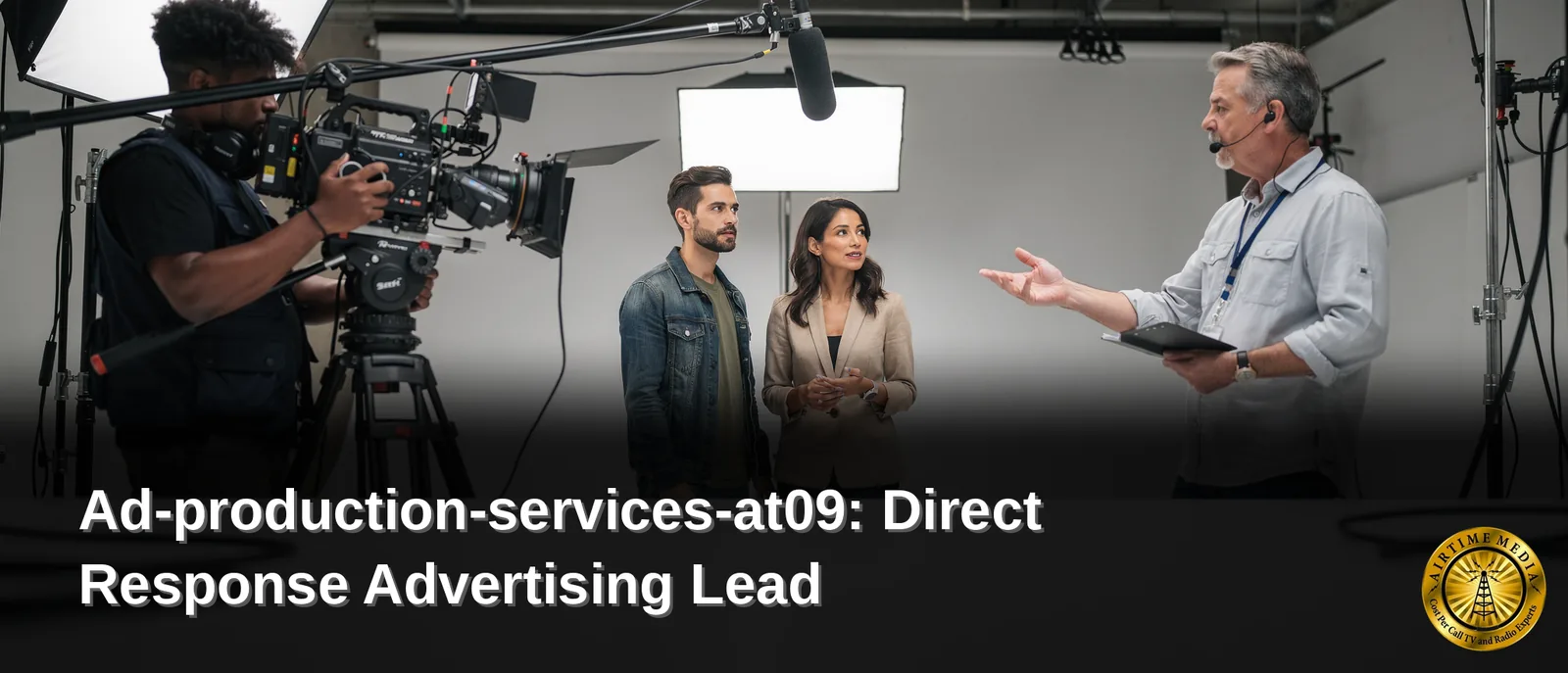
By Airtime Media Editorial Team · Updated 2026-08-07
Broadcast ad production and editing combines in-house video, audio, and creative services to deliver polished commercial spots for TV and streaming placements. Airtime Media, based in Stamford, CT, offers hands-on production and editing support tailored to advertisers' budgets and campaign needs.
Broadcast ad production and editing require compliance with network technical standards, clean audio mastering, and pacing built for direct-response performance. Airtime Media, a direct-response media agency working with over 2,000 TV and radio stations across 210 U.S. DMAs, partners with producers to ensure spots are broadcast-ready and measurable for qualified-lead generation.
Key Takeaways
- Airtime Media in Stamford, CT offers in-house creative production and editing services for video, audio, and multiple formats.
- Commercial video production creates short-form ads designed to perform across platforms without requiring repeated airtime purchases.
- Production partners treat each spot like a small film to achieve the attention and performance standards brands need.
- Global media experts have built proven track records since 2012 creating video campaigns for major Australian brands and enterprises.
What Does Broadcast Ad Production Involve?
Broadcast ad production combines scripting, filming, sound design, and compliance editing into one coordinated workflow. Skipping any stage risks a rejected spot, a wasted media buy, or a commercial that fails to convert callers. Marketing leaders searching for ad production services need a partner who treats each phase as connected, not siloed.
Airtime Media's in-house teams handle broadcast ad editing alongside creative production, covering video, audio, and additional formats for budgets of varying sizes. Design and production work extends across placements — television, radio, and connected-TV platforms. So brand managers get finished assets ready for any channel their media plan requires.
A typical production build includes
- Script and concept development tied to direct-response goals
- Filming or audio recording with attention to broadcast standards
- Sound mixing, graphics, and final editing
- Compliance review before delivery to stations
Why keep production in-house?
Keeping production in-house preserves creative control from concept through final delivery. Editors and producers stay aligned on brand tone without handoffs between outside vendors, reducing revision cycles and delays.
Who guides the production strategy?
Airtime Media's key staff bring more than 40 years of hands-on radio and television sales experience to every production decision. Operating from Stamford, Connecticut, the team applies that broadcast background directly to how to produce tv radio ads (how-to-produce-tv-radio-ads) that satisfy station standards and drive measurable inquiry volume.
How Should Broadcast Ads Be Edited For Impact?
Impact starts with treating every spot like a small film, not a throwaway clip. Each second on air carries a cost, and audiences decide within moments whether to keep watching. Weak pacing or a buried offer costs advertisers viewers and, ultimately, revenue.
Broadcast ad editing (broadcast-ad-editing) demands more discipline than social content because station standards and airtime economics leave zero room for wasted frames. Ad production services built for direct response cut differently than agencies chasing brand awareness: every scene earns its place by moving a viewer toward a call, click, or form. Since success gets measured in qualified leads rather than impressions, editors sequence footage to hit the offer early and repeat the response mechanism before the spot ends.
What makes a broadcast cut different from a digital cut?
Broadcast masters must meet strict technical delivery specs set by individual stations and networks. Editing teams with direct contracts across hundreds of broadcast and cable networks, along with more than 2,000 radio stations, work from known delivery requirements rather than guesswork, which shortens revision cycles.
Does the platform change how a spot should be cut?
Yes. A version built for OTT or connected-TV placements needs different pacing than one running as a social ad, even when the underlying story stays the same. Producers who understand how to produce TV and radio ads for multiple placements build modular cuts, trimming length and framing without re-shooting.
How Do You Produce And Launch Tv/Radio Ads?
Successful launches start with strategy, not scripts. Airtime Media has bought direct-response television, radio, and digital media since 2012, and that experience shapes every production decision before a single frame gets shot. Producing a broadcast-ready spot means matching creative to a measurable goal. Usually a call, a form, or a sale — from the earliest planning stage.
What does the production process involve?
Building a campaign that performs requires coordinating ad production services with media placement, not treating them as separate steps. Broadcast ad editing ensures every cut meets network delivery specs, runs the right length, and keeps the offer clear within the first few seconds.
The general workflow includes
- Defining the offer and call-to-action before scripting begins
- Producing footage or audio built for the intended channel
- Editing to broadcast and digital delivery standards
- Placing the spot across television, radio, or paid digital under a single cost-per-lead target
How does broadcast pair with digital for launch?
Broadcast and digital work best together, not separately. Television and radio drive category demand across all 210 U.S. DMAs, from major markets down to small ones. Digital campaigns capture that demand at the moment of intent through shared landing pages and call tracking. Understanding how to produce TV and radio ads that complement paid search and social — rather than compete with it. Is what separates a campaign that generates leads from one that only generates impressions.
- → Comparing Pay Per Call vs. Traditional Radio in NYC
- → Top Performance Broadcast Media Agencies in United States
- → Per-Inquiry Advertising: Broadcast Monetization Guide
- → Per-Inquiry Advertising vs. Remnant Spot Buys
- → Broadcast Traffic Integration for DRTV in Performance DRTV Campaigns
- → Dr-ad-regulations: Direct Response Advertising, Lead Generation